ABOUT ME
I’ve been fortunate to have incredible experiences in chocolate and cocoa — from managing raw material research and development around the world (cocoa, sugar, dairy, etc.) to combining them into formulas — I’ve personally created nearly 6,000 recipes. Optimizing flavor, cost, performance, and equipment across global supply chains has given me a perspective few people get to see.
I’ve worked with large multinationals and small family-owned businesses, helping create value in fascinating ways. I’ve built some of the largest cocoa fermentaries in the world, supporting factories both large and small, and picked up several patents along the way. I’ve learned to navigate the intersection of equipment, raw materials, and consumer insights — the core of chocolate innovation.
You can find my work on six of seven continents. Some of the countries I’ve been fortunate to work in include: the US, Canada, Mexico, Costa Rica, Nicaragua, Ecuador, Brazil, Colombia, Honduras, Jamaica, the Dominican Republic, Ghana, Ivory Coast, Nigeria, much of the EU, Russia, Iran, Indonesia, China, Philippines, Japan, Australia, Dubai, and India. If you’ve ever eaten chocolate, there’s a good chance I’ve had some hand in it. The people and friends I’ve met along the way have been extraordinary.
I’ve worked with a number of government and private sector organizations such as USAID and Winrock to donate my time to farmers and producers around the world, with the goal of improving their standard of living and access to food, medical, and education security for their families.

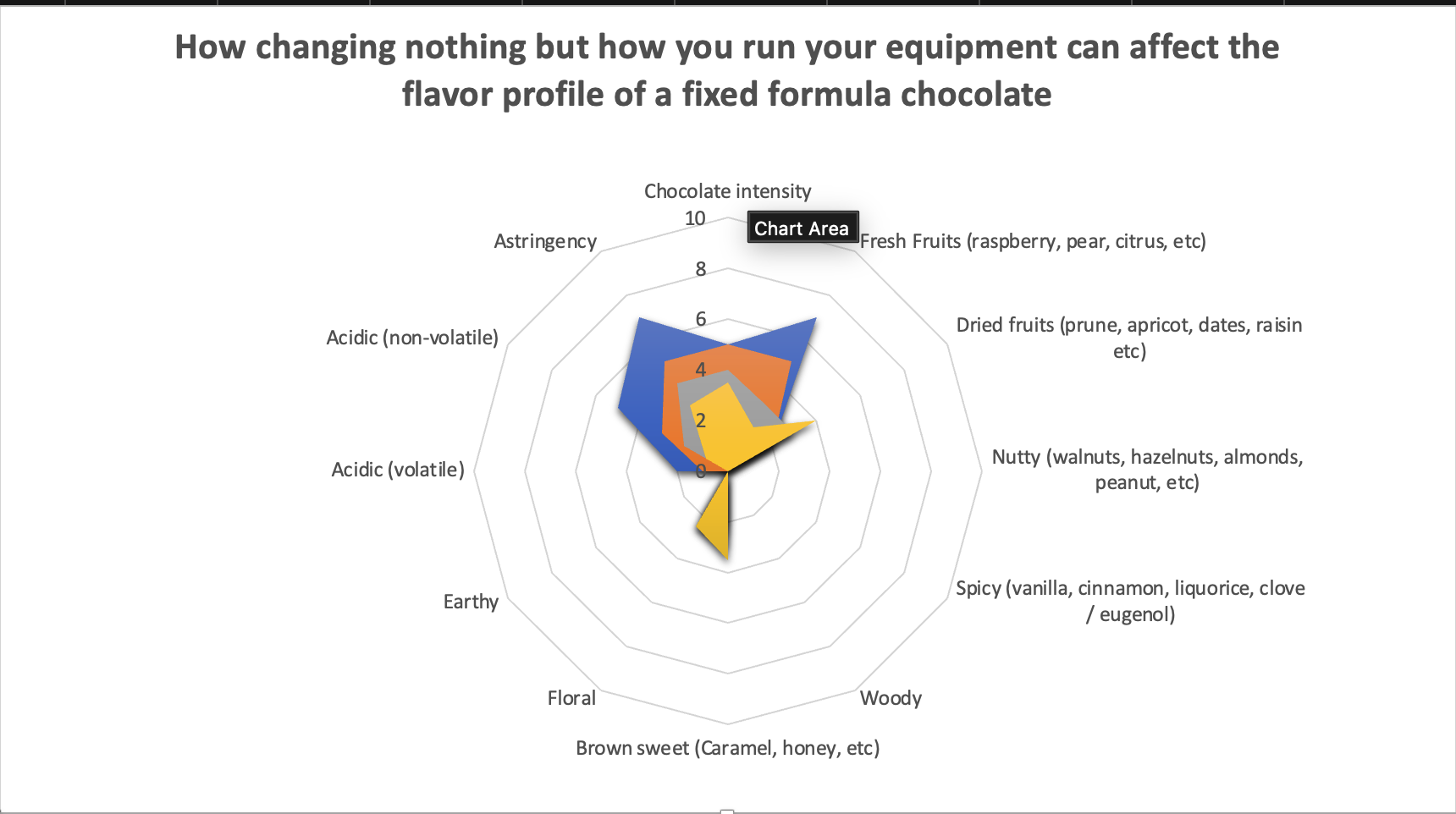
In another instance, after optimizing an equipment line, I demonstrated that a single formula could produce four completely different flavor profiles, simply by leveraging the equipment improvements. This helps chocolate makers expand their offerings without adding complexity to their supply chain.
Alternate sugar systems, protein fortification, solving problems with chocolate drops on high speed band ovens, ice cream novelty (who remembers when magic shell came out?). Chances are better than average I’ve done that too.


From raw materials to formulation to processing, there’s a lot to master in chocolate. One example is an equipment manufacturer asked me to help improve how they use their machines. They knew equipment — and are really great manufacturers - but they’re not chocolate experts. I was able to show them that by making a handful of equipment modifications - that they could now manage moisture in conching much more effectively, reducing it by 20–40% (!) which of course improved viscosity, which helps their customers (the chocolate maker) save money.
I’ve worked with — and even helped design — almost every type of equipment: roasters, mills, refiners, classifiers, mixers, conches. Understanding how raw materials, formulas, and equipment interact is critical to delivering consistent, high-quality chocolate.
I’ve been to most sugar refineries and milk powder producing plants (heck I've even harvested sugar cane myself!). The world of ingredient complexity is often a hidden world to many chocolate producers. Turns out that sugar is not always just sugar!
Today I find myself in the wonderful position of being (mostly) retired early, and getting to choose how I spend my time. For me - an important part of how I want to spend that time is by sharing all this expertise I've gained along the way - cocoa and chocolate are tremendously complex. I also am passionate about improving the lives of cocoa farmers - if you’re working to improve the standard of living for cocoa farmers - let me know how I can volunteer my time and knowledge to help.
If you need help with your cocoa or chocolate - feel free to drop me a line.


Contact me
Interested in working together? Fill out some info and I will be in touch shortly.